
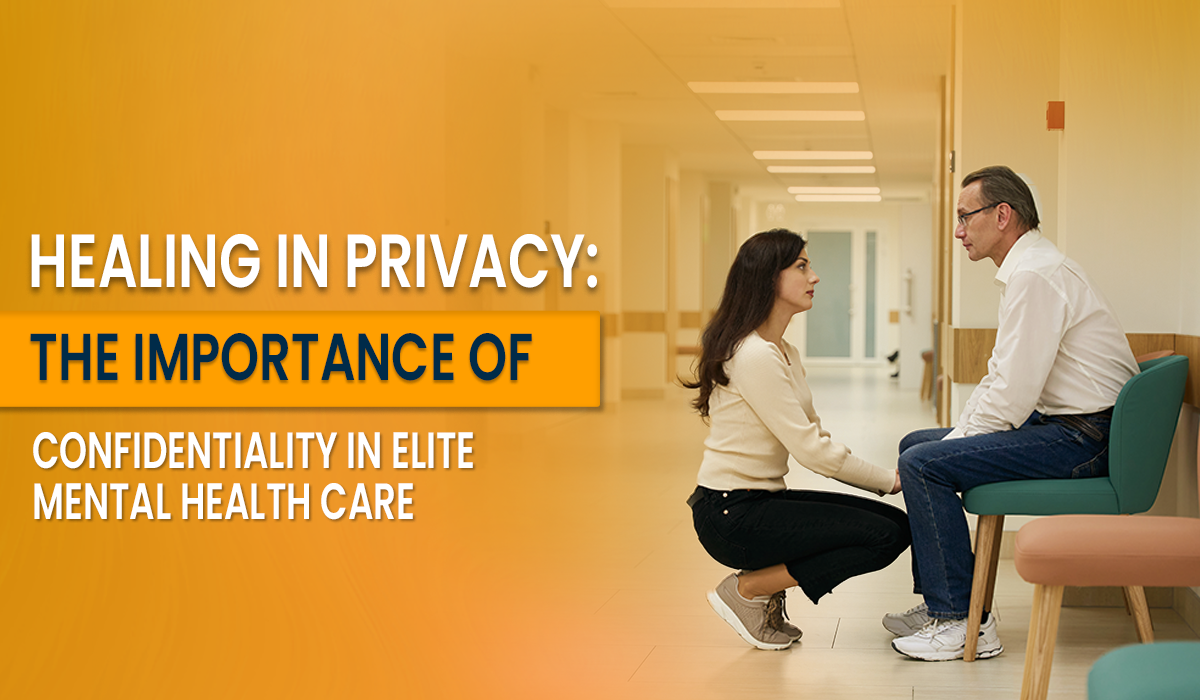
Mental health care involves a degree of trust that is unparalleled in the vast majority of other fields of healthcare. When individuals seek psychological support, they often provide information that is very personal, such as emotional conflicts, trauma, work pressure, and personal life situations. Mental health treatment should be effective, which means complete confidentiality. It is not merely a duty of ethics but also a clinical necessity.
Confidentiality is even more important in high-end mental health care settings. Famous people, businesspeople, and other professionals face additional issues related to image, social status, and career implications. Privacy healing will enable them to obtain care without fear of exposure or judgment.
Importance of Confidentiality and Mental Health Care
Mental health care is anchored through open communication between the client and the clinician. Treatments and accurate assessment require that the client is willing to tell the truth about his/her experiences, thoughts, and behaviors.
With confidentiality, it is guaranteed that:
- Individual secrets are not in jeopardy.
- Sensitive information is not abused or disclosed.
- Clients are secure to participate in treatment.
Confidentiality invasion or lack of clarity can make people enter into a state of non-care or restrict the content they reveal, which has a direct influence on the result of treatment. It is for this reason that privacy is fundamental to quality mental health care.
Understanding the Need for Confidentiality
Confidentiality in mental health care is important in that it can facilitate a safe therapeutic environment. Confidentiality encompasses everything related to care, including diagnoses and therapy sessions, medical history, and the fact that an individual is under treatment.
The major reasons why confidentiality is valuable are:
Psychological Safety
Clients would be more honest when they feel that their information would not be disclosed. Psychological safety will enable clinicians to diagnose problems and offer relevant solutions.
Protection from Stigma
Mental health conditions are still stigmatized in most societies despite the improved awareness. Confidentiality helps individuals to avoid any social, family, or professional consequences.
Ethical and Legal Compliance.
One of the key healthcare ethics is confidentiality. The law and ethical standards of mental health professionals require that they keep confidential patient information, which enhances accountability and trust.
Increased Treatment Results.
When clients believe in the system, constant involvement in the care is likely to occur. Continuity of care and long-term recovery occur under the support of confidentiality.
Significance of Confidentiality in Healthcare
Confidentiality is crucial in healthcare, not only in the mental health field but also in psychological practice, where it has been found to have a significant effect. Healthcare confidentiality includes the protection of patients' rights, autonomy, and dignity, and prevents unlawful access to confidential data.
In high-end healthcare settings, confidentiality is not just about compliance. It includes:
- Safe clinical and administrative procedures.
- Unlimited access to patient data.
- Low-profile communication behavior.
- Both digital and physical protection of records.
These actions will guarantee privacy at all levels of care, including consultation to follow-up.
Mental Health Care in India: Privacy as a Critical Concern
Indian mental health care is changing, as there is greater public awareness, legal change, and service expansion. Patient rights, one of which is the right to confidentiality, are formally recognized in the Mental Healthcare Act, 2017. Nevertheless, there are still practical issues related to privacy that do not allow many people to seek care.
Nearly everyone is afraid of being judged and stigmatized by peers, culture, and the workplace, which can be difficult to overcome when receiving mental health services.
These issues are of particular concern to:
- Business executives and investors.
- Careers in a visible or high-profile position.
- Families and high-net-worth individuals.
This leads to increased demand for private mental health care in India, which lacks any emphasis on discretion, personalized care, and high standards of confidentiality.
Secrecy in Elite Mental Health Care
Elite mental health care can be described in terms of clinical knowledge as well as privacy management. In this type of environment, confidentiality is applied in all areas of the care experience.
This often includes:
- Restricted access to patients and scheduled reservations.
- Consultation settings that are privately owned.
- Small, dedicated care teams
- Safe electronic communication and records.
- Tough internal measures for patient identity.
Such characteristics minimize unwarranted exposure and enable the clients to concentrate on the treatment completely.
How Privacy Supports Effective Healing
Privacy enables people to pursue mental health care without any form of outside pressure. Clients who are provided with confidentiality are better able to discuss sensitive issues like stress, trauma, relationship problems, or professional burnout.
Healing in privacy supports:
- Honest self-exploration
- Better clinical evaluation.
- Individualized treatment planning.
- Increased long-term care.
The meaningful progress of individuals whose personal or professional life requires discretion.
Choosing a Confidential Mental Health Care Provider.
The selection of a mental health care provider must be related to the consideration of confidentiality practices. Key considerations include:
- Effective privacy and data protection policies.
- Ethical standards in the profession.
- Protective treatment of medical records.
- Both discrete communication and follow-up procedures.
The aspect of confidentiality must be an obvious and explicit part of the care model of the provider and not a presumed and indirect aspect.
Conclusion
The importance of confidentiality in elite mental health care could not be overestimated. Trust, ethical practice, and effective treatment are all central to it. Within the framework of mental health care in India, where both the issue of stigma and privacy are still pressing problems hindering access, confidential care will be crucial in increasing access and enhancing outcomes.
Privacy in healing enables people to get help without violation of their personalities, reputation, and personal space. Confidentiality is a mandatory requirement for those who are in need of high-quality mental health care of high quality.
Reach out when you’re ready. We’re here to listen to Athena Luxus. & Connect with us +91 9718921212. Help doesn’t have to arrive in a crisis. It can begin quietly, with a conversation.